Tuesday, May 5, 2009

Eco-Tourism

Part of our course in Deshpande foundation we had visited DANDELI forest for 4 days and enjoyed with nature mingle with tribal people. we all fellows had food with them,exchange cultural with them, discuss about in what extent can we help them to get livelihood,played a drama about natural resource utilization, Game play for children's,tracking,wildlife safari,visit to KAVALA cave and so many activity with this.
this module really one of the most enjoyable module for me and also we had a session on bird watching also
one more happiest movement was that our Eco tourism instructor's were my Senior fellows they have organized programme very well manner. Picture with nature

Wednesday, March 11, 2009

Street Play

21 IN A DAY: Where there is a will there is a way.
We all Deshpande Foundation Fellows celebrated International Women's Day on 8 March with new initiative.
The main objective of this one day campaign was to encourage women to ask for their rights, sensitization of men and boys to stop discrimination and violence against women and give equal respect to all women and girls and secure equal participation of women.


All fellows conducted 21 street play activities in different communities, villages, public places around Hubli-Dharwad District of Karnataka. In these programmes along with 18 fellows a mass of local
people participated. facilitated and coordinate all fellows in conducting activities and other related works. Till the end of the day fellows conducted activities in 21 places of Hubli-Dharwad like: Gantikeri, CBT, Anand nagar, Nekarnagar, Old Hubli, Devinagar, Chetana colony, Railway quarters, Unkal, Bhairidevarkoppa, Navanagar,Gamanagatti of Hubli and Navalur, Sattur, Gandhinagar, Ambedkar Colony, Jannatnagar, Tejashwininagar, Laxmi singanakere, Nehru nagar and Srinagar of Dharwad area. By visiting these places and conducting street plays message was passed to more than 5000 people.

Guest Lectures:

Friday, February 20, 2009 : Guest Speaker
On 20th February Mr. Ayyappa M.Masagi oriented us about his great work of water saving, harvesting and knowing the value of water and water resource.. His vision is to make water efficient Globe. Thousands of experiments have been done for rain water harvesting by Masagi. He has been awarded for this work as an Ashoka Fellow and many other national level awards. This journey was started in 1994 by researching rain Water harvesting methods in his own farms lands. In 2005 he started WLF Water literacy Foundation to make Nation water efficient. ‘Harnessing our
most precious resource (water) and bringing it to the people’ is the motto of WLF. He also stated that Earth has 25% land and 75% water, out of it only 2.53 % is fresh water. Out of 2.53% of fresh water 0.3% lakes and 30% is in ground. Main techniques those are being used for saving water are Recharge, safe, reuse and use efficiently. Related to water conservation he conducted more than 1200 programs in 8 states of the nation. Masagi believes in simple living and high thinking.


Guest Speaker Mr. Vivek Pawar
On 27th of February in my Deshpande Fellowship Program I attended an interactive session with Mr. Vivek Pawar, founder of Sankalp Semiconductors. Sankalp is one of the leading companies that design and manufacture chips and conductors for television, cell phone, digital camera, sound systems etc. Vivek formed this entreprise in 2005 in Bangalore and soon after one year it got settled up in Hubli at BVB Engineering College campus and became India’s first MNC that has its office in a college campus.He explained his life journey from schooling to M.Tech in electronics. He was an average student and not more
serious about good marks always. He did schooling from a boarding school and engineering with electronics from Pune. His more interest was on television and it’s functioning. So he got campus placement in a television company late he joined Videocon. He soon got promotion as assistant production manager and did a record production of manufacturing TVs. He increased the production from 20 TV per month to 400 per month. But did not continue his job there he left his handsome job and joined M Tech for further study, there in a campus selection he got an offer in Texas Instruments (One of the best company in chip making) and placed in United States of America. His will power always pushes him towards success. On the bases of his will power he was cured himself after reaching up to third stage of cancer.
all DFP cohort 2 fellows with Mr. Vivek PawarDuring this session he gave many learning like; ‘Focus on the particular way where you can perform better and put all energy there in centralized way’. He told about ORIA (Observeà Reflectà IntrospectàApply/Action) that how to react on a goal to achieve that.
Meet with Mr. Paresh Choudhari Reliance in DCSE:


During his speech he appreciated social entrepreneurs. Around 100 audiences were presented in this moment.
Wednesday, March 11, 2009 :Dr. J.K.Hiremath, founder of 'Manovikasa' started this organization in 1994 for special children (rehabilitation center for mentally retarded children). His daughter is the inspiration for starting this special school. She suffered from meningitis and died in the year 1994. This incident made him to run this school for special children. Dr. Hiremath visited Deshpande Foundation on 6 March as Guest Speaker and spent his valuable time with all DFP Cohort II fellows. He shared all about Manovikasa and his efforts.
Dr. Hiremath was working in an American organization resigned his job came to India & in 1994 he started a small day care center with two rooms from 10:30am to 4:30pm for mentally retarded children. This grew into a residential school by 2003.
Reasons for the development of mental retarded
Age of the mother
Mental & physical health of the mother & Genetic abnormalities
Mother’s addiction to drugs

Malnutrition
Half attempted abortion
Use of un prescribed drugs
Accidents & Epileptic attack by hormonal change
Forceps delivery (80%)
Alexia
Prolong delivery
Cesarean (2%) & Low birth
Functions of Manovikas
Being a neuro clinical psychiatrist Dr.Hiremath design the perfect residential arrangement for the mentally challenged children. He could also successfully design the activities of Manovikas. They are,
· Visiting the villages & building the awareness.This includes early identification, facilities available from the government, diagnosis & issue of certification.
· Convergence service. They have adopted 7 districts in Kanpur, each village is having some SHGs which helps in the taking care of the children, for this parents of the children are charged Rs2/-
· Upanayana. Here they train the parents as co-therapists. Different therapies will be given to the child. Like,
Hydro therapy
Sand therapy
Jump fit therapy
Multi sensory stimulation therapy
Squint correction therapy
Physiotherapy
Vita therapy
Speech therapy & Drooling therapy
· Special education system. Here level assessment of the children is done by check list. They follow the individual rehabilitation program (IRP), in which each child will be having its own curriculum. Basic knowledge like Time, Money, Writing name, Signature was taught to the students. For female domestic ability development program is also conducted. Music therapy, sports, yoga, dance is also part of the school activities.
· Residential service. They teach self help skills like, Toilet training specially reporting, eating, bathing, grooming, for female menstrual hygiene. They also take children for excursions.
· Achievements of school.
Gold medal in china in swimming
· Challenges face.
Meet the parents expectation
Rehabilitation of children in home
· Contact:Ph.-9243281756
e-mail:manovikasa@yahoo.com.

Advocacy:

5th March 2009 :Importence of ADVOCAY.

As a part of our course module the ADVOCACY taken by 2 recourse persons namely Ms. UshaRani and Dr.Gopal Dabade, SDM Medical College. This advocacy is a people centered activity and good weapon to make public authority to work honestly. Both the class were very interesting they told their own work experience with advocacy what I understood by class.


What is the meaning of Advocacy?
To protect rights or change unfair discriminatory or insulting treatment to fair, equal, and humane treatment, To improve services, gain eligibility for services or change the amount or quality of services to better meet the needs of an individual and To remove barriers which prevent full access to full participation in community life.

10 Steps in Advocacy
· DEFINE THE PROBLEM—what is the issue? Who do you have the problem with?
· SPELL OUT THE SOLUTION—Define your goals. What do you WANT? Get a picture of VICTORY in your mind!
· DETERMINE YOUR RIGHTS—which department regulates what is going on? Locate and review the appropriate regulations and procedures. If you need assistance understanding the material, get help from someone who is informed. Ask for your rights, even if you can’t find the regulations to back you up.
· WHO WILL DETERMINE WHAT HAPPENS?—who makes the decisions?
· PREPARE YOUR CASE—Get your paperwork and documentation in order. Keep a notebook of phone conversations and correspondence. Plan a strategy. Try to separate feelings from facts.
· PLAN—Write an agenda. Practice presenting your case or problem to a friend or advocate.
· ACT—Make the phone call or write the letter. Be assertive NOT aggressive. State what you want and when you want it.
· EVALUATE YOUR RESULTS—what was the outcome? Will you need to follow-up? How do you feel about the results?
· FOLLOW-UP—Take any necessary follow-up steps. Decide what to do next.
· CELEBRATE—even small victories should be celebrated. Congratulate yourself for taking the steps to resolve your problem.

Wednesday, March 4, 2009

Right to Information Act,2005 Leads to Good Governance


- A Class by Thippanna & Ashutosh

Introduction:
Above said two instructors thought us RTI act with practical module in 3 days. I am very much happy to mention that these 2 fellows are our seniors in DCSE under DFP.
The Right to Information Act was enacted by Parliament in 2005. It is an effective weapon in the hand of public. We can call this act as base for other all acts. By hearing name of this RTI every Government organization will starts to shivering that may be Central, State government officers and who getting fund from government partially or completely it means every Indian citizen can get information from these offices 13 states are enforced this act in the year 2005(Kerala, Gujarat, Chattisgarh,Haryana,Punjab,Tripura, Andhra Pradesh, Uttaranchal, Meghalaya, West Bengal, Orissa and including Karanataka)
“Every shall have the right to freedom of expression; this right shall include freedom to seek, receive and impart information and ideas of all kinds, regardless of frontiers, either orally, in writing or in print, in the form of art, or through any media of his choice.” .
This act calling as RTI act 2005 its commenced on 12th October 2005, it apply whole India except Jammu & Kashmir, according to this every information we can get apart from information, disclosure of which would prejudicially affect the sovereignty and integrity of India, the security, strategic, scientific or economic interests of the State, relation with foreign State or lead to incitement of an offence etc this act bulk of 22 sections.


Some of the important sections:
· Section 4(1)(b) Sue-Muto (Organization self declaration with 17 points)
· 6(1) is file a application for specific information
· 18 complaint on concern person for refusal of application without providing proper information

“Every shall have the right to freedom of expression; this right shall include freedom to seek, receive and impart information and ideas of all kinds, regardless of frontiers, either orally, in writing or in print, in the form of art, or through any media of his choice.”


From 3 days class I come to know the following matters relating to RTI.
· Universal access to information
· Right to information includes inspection of records, works and taking certified samples of material.
· “Information” includes that records, e-mails, samples and models.
· It covers all the public authorities, NGOs, private bodies which is getting fund by government
· PIO should provide information.
· No prescribed form for information.
· Reasonable fees (only for photocopies).
· P.I.O. has the duty to assists requesters.
· No need to give reasons for requesting information.
· If Information concerns the life and liberty to be provided within 48 hours
· Information to be providing within 30 days of receipt of request.
· Public can directly make complaints and appeals to information Commission


Finally this act is very much important to access our individual rights. But about this education and awareness programme is required. It is a good platform to common man.
FORE MORE INFORMATION REFE:

www.apnait.org and www.apnait.wordpress.com


Sunday, February 15, 2009

My New Learnings

Health is Wealth
We all know that ‘Health is wealth’ so I had class on 2nd February 2009 about Public Health and also it was my first Module session in my course it was taken by Mrs. Meenakshi Verma-Agrawal (Program Officer-Global Exchange Programs) Deshpande Foundation. Health is nothing but the complete physical and mental status of an individual. It is mainly affected by biological, environmental, chemical and emotional factors. Main learning’s of this class is Core Areas of Public Health and it's uses, How to understand the case studies about slum health problem, how the health factor is effect on individual economic/social life and How to prepare project proposal for Health project she made us practice in class with two teams, learnt realities of urban slums, services available to improve their health status and our role required for the promotion of their health. Overall full day session was a bunch of learning to understand Public Health.

One Session with Founder of DCSE
We had session with Gururaj Desh , CEO of US besed Sycamore Inc and Founder of Dheshpande Foundation.Desh started his interaction by using local language(Kannada) mainly he focused on innovative solutions to the social challenges would take the country towards list of developed country’s. He also said that students should pledge to search of creative ideas to the burning challenges that have been affecting the nation's growth. This will definitely lead a sustainable change in the country's economyMainly he focused on that scaling, innovation, and entrepreneurship were three most in essential parameters in taking the fast track.

Last he told that Hubli city was opening up itself to the developments. He asked students to choose Hubli to make it a model city.

Saturday, February 14, 2009

Talk with former President, Dr A.P.J Kalam


“Dream is not that what you see in sleep, Dream is the thing which does not allow you to sleep” -Dr.Kalam
6th February, 2009 is a tremendous day for me and whole Dharwad District. Whole Hubli people were get vibrated. We had chance to meet him and took snap with him. This made us very happy.

Strength of youth (Dr.Kalam) has inaugurated our foundation, Deshpande Centre for Social Entrepreneurship at B.V.B College of Engineering and Technology, Hubli. After inauguration referring “Vision 2020”, he said: that “All of us have before us a mission of transforming India into a developed nation. The five key areas where India has a core competence for integrated action are agriculture and food processing, education and healthcare, infrastructure, reliable and quality electricity supply, surface transport and infrastructure for all parts of the country, information and communication technology and self-reliance in critical technologies.” He also motioned that these five areas were inter-related and if they progressed in a coordinated way, it would lead to food, economic and national security. “Of the five areas, the major one is development of infrastructure in rural areas through Provision of Urban Amenities in Rural Areas. The number of PURA clusters for the country has been estimated at 7, 000.
He hoped that DCSE and BVB College would take the initiative of forming a “PURA” complex near Hubli. He mainly focused on creative leadership which is essential for economic development and hoped it would create an atmosphere conducive to produce leaders from among the youths of this region. He mentioned Prof.Wangari Mathai, Ottavo Kapachi and S.Ramanujam’s examples to the youths and entrepreneurs. Kalam referred to the success of “Chandrayaan” of ISRO and elaborated on the hard work behind it.
I am really happy to be a part of Deshpande Foundation because it is very easy to meet wonderful personalities from national and international and talk with them. I am so grateful to Deshpande Foundation for providing such opportunities. And I request my foundation to give this opportunity to some more students in future.

The same day we met some other personalities like
· Narayan Murathi- Infosys
· Sudha Murathi- Infosys
· Manivannan- District Commissioner of Mysore


LETTER TO MY SELF

To,
Savita
Sub: When I interacted with my self


Dear Savita,
Hey, Hello… Hello……….. Savita, what are you doing here? Are you mad? You had a good job, good position, handsome salary in your previous organization. Why you left the job? And here you are learning like a student and working restless you are big fool.(so several time peoples asked this question to me)


Same time my one more inner voicewhispered that hey fool stop your question, and baseless arguments. Think pakka practically having good salary having good job is does not stuff having practical, competitive and sensible knowledge is very important ok…..
Hey see I joined this foundation just two days back and how I am getting things in induction only. Definitely I will show you what I am within six months. Do you know what I have already this is not enough for work in developmental sector minimum I have to have 50% acquaintance/social contact where I want work.
Just I entered in this foundation see how the things, attitudes, and my personality is waiting for healthy change in me.
Do you know I don’t want to be a beneficiary of DFP I want to be a partner of this DFP and contributor to social change.
To achieve this goal, to see an clear picture about me I am ready to face any challenges and any kind of work assigning to me here. Don’t disturb me again & don’t ask me these question ones more.
Bye…………………………….
My Aim and Dream: I want to become great IDEAL in this world. I want to start my own Enterprise/NGO after working some time in a funding organization.
For this I am already saving Rs. 500/- pm from last 2 years in a separate Bank Account.

My Step Towords Village

Village Stay: As a part of our course we Conducted PRA At Kamplikoppa:
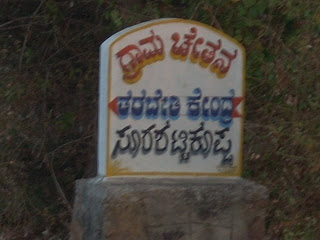
First day we visited to Gram chetan at Surashettikoppa, it is greenery and covered by trees. Mr. Deepak Kshira Sagar introduced about Gram chetan & he has shared his experience about people participation. He said that Building participation of people is very important tuff job. It is not easy task. Initially they have countenanced more problems to work with people. While selecting the people they didn’t have any restriction. With support of community they built check dam at Harugera. He shared other examples also with us.
After completion of orientation by BIFE Project Coordinator our team stepped towards Kampalikoppa to conduct PRA. The villagers have welcomed us very different way, applying color turmeric powder & turmeric powder (Traditional way). We have divided our entire in to 5 groups. Each team got different activity like Resource mapping, Seasonality Mapping for income & migration, Venn diagram, FGD on milk production, Matrix ranking for composting. And conducted Time line on sanitation. Finally we got some 50% idea about PRA. After that I moved with my coworkers I have been in Resource mapping group. We did the resource map about natural resources of the village with support of villagers. The drawn map indicated that the village having enough NR.
Village Stay: As a part of our course we visited to Naganur Panchayat.
Introduction:
The Nagnur village is comes under Khalgatigi Taluk, Shurshetti Koppa Panchyath of Dharwad district. It is 25 KM away from Hubli city. Only road transportation available for this village. Four our team members and me visited this village on 11th and 12th of Feb 2009.
History of the village:
‘Nagnur’ means village of snakes. We got different stories from the people regarding village history. One of the elders said that the village was called Laxmipura after that it changed to Yalghatigi Nagnur and Nagnur. Other sources said that some body found Nagalinga in the village long back that is why villagers named Nagnur.
Team 5star conducted activities:

ž Transact walk
ž Anganvadi Visit
ž School Visit
ž Discussion with Director of Mahasangha
ž
Visited Fields
ž
Social Mapping

ž
Time
Line
ž
Resource
Mapping

Transect Walk at “Naganur"
On 11th Feb 2009 in the morning we went to Nagnur which is comes under Kalaghatagi Taluk, by walk it is 2km from Grama chetan, tar road is destroyed. On the way we saw ground nuts, cotton crop, and sugarcane & sunflower crops in field. When we entered in to the village Coconut trees welcomed us to village in front of every house. We met some youths & Key persons few of them helped us for transect walk. We observed that houses are built very systematically in proper way. In the entrance of the village we have seen the plat “Government Asharaya Yojana “Houses. Roads are very big and space able. Majority of the houses are Kachha houses.
When we entered in to the village people were busy with their works. They were waiting for bus at Basavan temple, some people were going to the field, and others are having tea at hotel & children were playing in front of community hall. We catch the one local person called Shivappa and we continued our TW. There are 5 temples in the village; Basavan , Devamamman , Hanuman Durgamman temple and one mosque. Education system concern there is a primary school, Anganwadi and institutions concern community hall, Milk Dairy, Panchayath office.
Village was hygienic. Everyone has drawn eye-catching rangoli in front of their houses. It shows their indigenous familiarity, local customs & practices. Rapport building was main challenge for us. As soon as we entered the village we make the first move for rapport building.
When we met people our team members were saying “ Namskara “ to villagers. We clearly explained them reason for entering to their village. Afternoon we visited one land which was very greenery we collected some information regarding soil and crops.
It was the late evening when we started our activities because people still returning from the fields. Later we gathered the people for social mapping and Time line map.
Secondary Data collection:
For collecting secondary data we have visited Anganwadi, Panchayt, Milk Dairy, and Mahasangha & Village Accountant. The total population of the village is 1390 in this 686 male & 704 female. The voters are 891. Village composed with 360 families. In this one house is Pakka remaining all houses are kachha. Big formers are 5, Medium formers are 132 & small formers are 172. The total land is 1982.2 Hectors. For detail information you can see below table

FGD: Our team has conducted focus discussion group in the evening. We have collected information about health & sanitation. But, gathering people was challenge for us. When we called people they have not responded us because they were busy with their work & they neglected us. So we have used one traditional tool for bring the people to apply kunkuma door to door & someone we met on road we applied them. We After gathering Mrs.Jayashree villager sang a welcome song. Later we started discusstion
Social Map

This social map has helped us to understand about Naganur village. This map is drawn by village people and which shows the social structures and institutions found in an area. It also helped us to learn who is living where & about where is a temple, school, Community hall, Anganwadi & other offices.

Time Line
Our team has decided to draw the time line map. Mainly our targeted group was women and we called them traditional way putting KUNKUM on their forehead. And we did time line comparative study between situations in 1970 periods and now. Before 1970 the cholera, pelage & T.B like that disease was there. But, now AIDS, Cancer & Chicken gunny. Everyone believed on Ayurvedic treatment. Before 1970 they didn’t have hospital facility, Toilets, Pure water facility, Transport facility & Schools. Now they have school so every child getting literacy, they are growing other crops like suppota trees & mango trees, everything has changed the ladies didn’t not know about bank but now they can easily do bank transaction. Like that there village has changed
Resource Mapping :

The Resource map has helped us to learn about community & its resource base. To learn the villagers perception of what natural resource are found in the community and how they are using. We started in the next day morning after gathering people we have introduced about resource map we have given rangoli powder to draw. We also took care about involving people. They have drawn water source, different type of soils, Hills, roads, lake, & grazing land.

Monday, February 9, 2009

Vocational Training For Childern


Child Centered Activities
Leaders: Latha.k and Malini
Follower: Savitha and Gayathri

It was 12:30pm when we reach balakiyara balamandira in gantikeri. It is a beautiful place. We met Mrs.Kankanur who is the in charge of that balamadira. She explained us about balamandira it has 130 girl children out of them. Some are orphan, some are Child delinquency. When we told her, we came to teach children some activities and wish to follow up it in following days she felt happy and provided us two classrooms.
we selected 7th, 8th and 9th students for activity that is paper bag making. w
e started teaching the activity it went for 1hr, children with enthusiasm. Children were happy and asked us to come again. While coming we met Mrs. Kankanur and presented few paper bag made by children’s she felt happy and appreciated our work, asked us to come again and teach many things to children.